
Construction workers handle many materials that can harm their health. Cement, paints, solvents, wood dust and silica dust are common on building sites. Some can cause harm after a short period of contact. Others can lead to serious illness after years of exposure.
This is why COSHH is important in construction.
COSHH stands for the Control of Substances Hazardous to Health. It is a set of regulations that requires employers to protect workers from harmful substances at work. It also requires them to assess risks, put safety measures in place and check that these measures work.
Understanding COSHH helps construction managers, site supervisors and workers prevent illness and keep their sites safe.
This guide explains the COSHH Regulations 2002, common construction hazards, how to complete a COSHH assessment and the control measures every site should consider. It also includes a free COSHH assessment template that you can adapt for your workplace.
What’s Included in This Article
- What COSHH means in construction
- What the COSHH Regulations 2002 require
- Common COSHH hazards on construction sites
- How to carry out a COSHH risk assessment
- The hierarchy of control measures
- RPE and face-fit testing
- Health surveillance and worker training
- A free COSHH assessment template
- Frequently asked questions about COSHH
What Is COSHH in Construction?
COSHH means the Control of Substances Hazardous to Health. It refers to the rules that protect workers from harmful substances used or produced during work.
In construction, these substances can include chemicals, dust, fumes, vapours and other materials that may damage health.
Some hazards come from products that workers use. For example, wet cement, paint, adhesives and cleaning chemicals can cause skin or breathing problems.
Other hazards are created by the work itself. Cutting concrete can release silica dust. Sanding timber can create wood dust. Welding can produce harmful fumes.
These substances can enter the body in different ways:
- Inhalation: Breathing in dust, fumes, gases or vapours.
- Skin contact: Harmful substances touching or passing through the skin.
- Ingestion: Swallowing harmful substances, often through contaminated hands, food or drinks.
- Injection: Substances entering the body through cuts, punctures or damaged skin.
The effects can range from skin irritation and breathing problems to long-term lung disease and certain cancers.
COSHH is not only about wearing protective equipment. It requires employers to understand the hazards, assess the risks and prevent or control exposure.
What Do the COSHH Regulations 2002 Require?
The Control of Substances Hazardous to Health Regulations 2002 set out the legal duties for controlling harmful substances in the workplace.
Under these regulations, employers must prevent exposure where reasonably practicable. If this is not possible, they must provide suitable measures to control exposure.
The main requirements include:
1. Carry out a COSHH assessment
Employers must assess the risks before work that could expose employees to hazardous substances begins. The assessment must consider the substance, its health effects, how workers may be exposed and how long exposure may last.
2. Prevent or control exposure
Employers should first consider whether they can remove the hazard or replace it with a safer option. If this is not reasonably practicable, they must use suitable control measures.
3. Maintain control equipment
Equipment used to control exposure must be kept in good working order. This can include dust extraction systems, ventilation equipment and other engineering controls.
4. Monitor exposure where needed
Employers must arrange exposure monitoring where the risk assessment shows it is needed to check that control measures remain effective or to protect workers’ health.
5. Provide health surveillance where appropriate
Some workers may need regular health checks because of the substances they handle or the work they carry out.
6. Provide information, instruction and training
Workers must understand the substances they may encounter, the risks involved and the steps they need to follow to protect themselves and others.
7. Review the assessment
COSHH assessments must be reviewed when there is reason to believe they are no longer valid or when there are significant changes to the work.
Employers with five or more employees must record the significant findings of their risk assessments.
These requirements come from the COSHH Regulations 2002, particularly Regulations 6, 7, 9, 10, 11 and 12.
The Health and Safety Executive (HSE) provides further guidance on COSHH risk assessments.
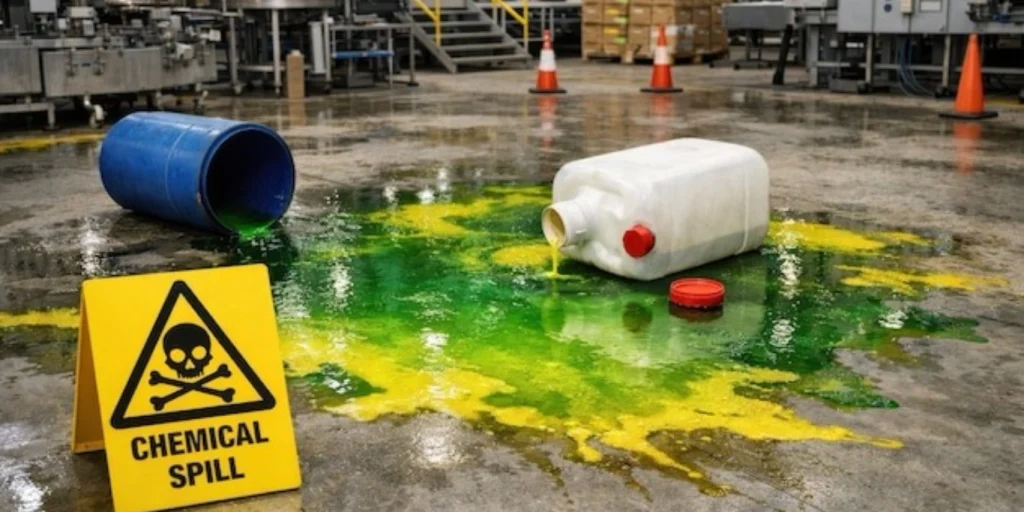
Common COSHH Hazards in Construction
Construction sites contain many substances that can affect workers’ health. Managers and supervisors must identify these hazards before work begins.
Here are five common examples.
1. Silica Dust
Silica dust is one of the most serious health hazards in construction. It is produced when workers cut, drill, grind or break materials that contain crystalline silica.
Common sources include:
- Concrete
- Bricks
- Mortar
- Sandstone
- Granite
- Some paving and stone products
The most dangerous form is respirable crystalline silica (RCS). These very fine particles can travel deep into the lungs when inhaled.
Long-term exposure can cause silicosis, a serious lung disease. It can also increase the risk of lung cancer and other respiratory conditions.
How to control silica dust:
- Use water suppression when cutting or drilling materials.
- Fit suitable dust extraction to tools.
- Use the correct extraction equipment for the task.
- Keep workers away from dusty areas where possible.
- Provide suitable respiratory protective equipment (RPE) when needed.
- Arrange health surveillance where required.
Dry sweeping should be avoided because it can put settled dust back into the air. Use suitable dust extraction or other safe cleaning methods.
2. Cement and Concrete
Cement is used in many construction activities, including mixing mortar, laying bricks and pouring concrete.
Wet cement can cause skin irritation, dermatitis and serious chemical burns. It can also cause eye injuries if it splashes into the eyes.
Dry cement dust can irritate the nose and lungs. Workers who handle cement regularly may face a higher risk of skin problems.
How to control cement exposure:
- Wear suitable waterproof gloves and protective clothing.
- Use eye protection when mixing or handling wet cement.
- Avoid kneeling or standing in wet concrete.
- Wash cement from the skin as soon as possible.
- Provide suitable washing facilities.
- Use safe methods to reduce dust when handling dry cement.
Workers should never rely on gloves alone. They must use the correct type of glove and change damaged or contaminated clothing.
3. Wood Dust
Wood dust is produced when workers cut, sand, drill or shape timber.
It is common in joinery workshops and on construction sites where timber is prepared or fitted.
Breathing in wood dust can cause asthma and other breathing problems. Some hardwood dusts can cause cancer of the nose and nasal sinuses.
How to control wood dust:
- Use tools with suitable dust extraction.
- Carry out cutting and sanding in designated areas where possible.
- Keep extraction systems in good working order.
- Use suitable industrial vacuum cleaners.
- Avoid dry sweeping or using compressed air to remove dust.
- Provide RPE where the assessment shows it is needed.
Employers should also check whether workers need health surveillance due to regular exposure.
4. Solvents and Adhesives
Solvents are found in many construction products. These include adhesives, sealants, cleaning products, coatings and some paints.
Exposure can happen when workers breathe in vapours or get the product on their skin.
Some solvents can cause headaches, dizziness, skin irritation and breathing problems. High exposure can affect the nervous system.
How to control solvent exposure:
- Choose products with lower solvent content where possible.
- Use products in well-ventilated areas.
- Keep containers closed when not in use.
- Follow the manufacturer’s instructions.
- Wear suitable gloves and other protective equipment.
- Store products safely and away from incompatible materials.
Workers should also know how to respond to spills and dispose of solvent waste safely.
5. Paints, Coatings and Sprays
Paints and coatings are used in many construction and finishing jobs. Some contain chemicals that can irritate the skin, eyes and lungs.
Spray painting can create fine droplets and vapours that workers may inhale. Certain products, including some two-pack paints, can contain isocyanates. These can cause occupational asthma.
How to control paint exposure:
- Check the product label and safety data sheet before use.
- Use less hazardous products where possible.
- Provide suitable ventilation.
- Use spray booths or controlled areas where appropriate.
- Wear the correct RPE and protective clothing.
- Restrict access to areas where spraying takes place.
The correct controls depend on the paint, application method and level of exposure. A general dust mask may not protect workers against chemical vapours.
How to Carry Out a COSHH Risk Assessment
A COSHH assessment helps employers understand how workers may be exposed to harmful substances and what they must do to prevent or control the risks.
It should be specific to the substance, task and working environment. A generic assessment may not cover the actual conditions on a construction site.
Follow these steps.
Step 1: Identify the Hazardous Substances
Start by listing all substances used or produced during the work.
Check product labels and safety data sheets (SDS). These documents provide information about the product’s hazards, health effects, safe handling and recommended protective measures.
Do not focus only on chemicals in containers. Include substances created by work activities, such as silica dust from cutting concrete and fumes from welding.
Step 2: Identify Who Could Be Exposed
Consider everyone who may come into contact with the substance.
This can include:
- Workers using the product.
- Other trades working nearby.
- Site supervisors and managers.
- Cleaning and maintenance staff.
- Contractors and visitors.
Think about how the substance could reach them. Could they breathe it in, get it on their skin or swallow it through contaminated hands?
Step 3: Assess the Level of Risk
Consider how harmful the substance is and how exposure may happen.
Look at:
- The amount of substance being used.
- How often the task is carried out.
- How long workers are exposed.
- Whether the work takes place indoors or outdoors.
- The number of people nearby.
- Existing control measures.
- The possibility of accidental spills or equipment failure.
Also check whether the substance has a workplace exposure limit (WEL). This is the legal limit for exposure to certain substances in the workplace.
Step 4: Choose Suitable Control Measures
Decide how to prevent or reduce exposure.
Start by asking whether the hazardous substance or process can be removed. If not, consider a safer alternative.
Then look at engineering controls, such as dust extraction and ventilation. You may also need safe working procedures, restricted access and suitable protective equipment.
The measures must match the risks identified in the assessment.
Step 5: Record the Findings
Write down the significant findings and the actions needed to control the risks.
Employers with five or more employees must record these findings. Smaller employers should also keep written assessments as good practice.
Make sure workers can understand the findings and know what controls they must follow.
Step 6: Review the Assessment
A COSHH assessment is not a document that should be completed once and forgotten.
Review it when:
- A new product or substance is introduced.
- The work method changes.
- New equipment is used.
- Control measures stop working properly.
- Workers report health concerns.
- There is an accident, exposure incident or near miss.
- There is reason to believe the assessment is no longer valid.
Keep the assessment up to date and make sure workers follow the latest controls.
Understanding the Hierarchy of Control
The hierarchy of control helps employers choose the most effective way to manage hazardous substances.
The aim is to prevent exposure wherever possible. Personal protective equipment should not be the first or only solution.
The main control options are:
1. Elimination
Remove the hazardous substance or activity completely.
For example, change the design or construction method so that less cutting or grinding is needed.
2. Substitution
Replace a hazardous product with a safer alternative.
For example, choose a lower-solvent product instead of one with a higher solvent content, where it is suitable for the job.
3. Engineering Controls
Use equipment or systems to prevent harmful substances from reaching workers.
Examples include:
- On-tool dust extraction.
- Water suppression.
- Local exhaust ventilation.
- Enclosed processes.
- Suitable ventilation systems.
4. Administrative Controls
Change how the work is planned and carried out.
This can include limiting access to hazardous areas, reducing exposure time, providing training and setting safe working procedures.
5. Personal Protective Equipment (PPE)
Provide suitable protective equipment when other measures cannot adequately control the risk.
This may include gloves, eye protection, protective clothing and respiratory protective equipment.
Under COSHH, employers must use control measures in line with the legal requirements and the risks identified. PPE should support other controls, not replace effective measures that can prevent exposure at source.
RPE and Face-Fit Testing in Construction
Respiratory protective equipment (RPE) helps protect workers from harmful substances they may breathe in.
It can be needed for tasks that create silica dust, wood dust, fumes or chemical vapours.
However, not every mask protects against every hazard. Employers must select RPE that is suitable for the substance, exposure level and work activity.
For tight-fitting face masks, employers must arrange a face-fit test.
A face-fit test checks whether the mask forms a proper seal around the worker’s face. Without a good seal, harmful substances can pass through gaps and reach the lungs.
Workers using tight-fitting masks should:
- Complete a suitable face-fit test.
- Be clean-shaven where the mask seals against the skin.
- Check the mask’s fit before each use.
- Follow the correct cleaning and storage instructions.
- Replace damaged equipment and filters as required.
A user seal check is needed each time a tight-fitting mask is put on. This is not the same as a face-fit test.
Employers should also provide training so workers understand how to wear, inspect and maintain their RPE.
Health Surveillance Under COSHH
Health surveillance involves checking workers’ health when they may be at risk from exposure to certain hazardous substances.
It helps employers identify early signs of work-related illness and review whether their control measures are effective.
In construction, health surveillance may be needed for workers exposed to:
- Respirable crystalline silica.
- Certain wood dusts.
- Substances that can cause occupational asthma.
- Substances that can cause occupational dermatitis.
The type of health checks depends on the substance and the risk. It may include skin checks, breathing questionnaires or lung function tests.
Health surveillance is not automatically required for every hazardous substance. Employers must decide whether it is appropriate based on the risk assessment and COSHH requirements.
Where it is required, it should be carried out by a suitably competent occupational health professional.
Free COSHH Assessment Template for Construction Sites
A COSHH assessment should be clear, practical and easy for workers to follow.
You can use our downloadable COSHH Assessment Form as a starting point when assessing hazardous substances on a construction site.
COSHH Assessment Checklist
Before work starts, check that:
- All hazardous substances have been identified.
- Product labels and safety data sheets have been checked.
- Workers who may be exposed have been identified.
- The risks have been assessed.
- Suitable control measures are in place.
- RPE and PPE are suitable for the task.
- Face-fit testing has been completed where required.
- Workers have received the necessary training.
- Safe storage and disposal arrangements are in place.
- Health surveillance has been considered.
- The assessment has a review date.
You can download our COSHH Checklist here.
Important: This is a basic template, not a completed COSHH assessment. It must be adapted to the actual substance, task, site conditions and level of risk. A checklist alone does not meet the legal requirement for a suitable and sufficient assessment.
For further guidance, use the HSE’s step-by-step guide to COSHH assessment.
Does COSHH Cover Asbestos and Lead?
No. Asbestos and lead have their own specific regulations.
Although both can create serious health risks in construction, they are not managed solely under COSHH.
Asbestos is covered by the Control of Asbestos Regulations 2012. These regulations set out the duties for identifying, managing and working with asbestos-containing materials.
Lead is covered by the Control of Lead at Work Regulations 2002. These regulations deal with the risks of lead exposure and the steps employers must take to protect workers.
Construction managers and supervisors must understand which regulations apply before work begins.
If a job may disturb asbestos-containing materials, workers must follow the relevant asbestos requirements. They should not treat the task as an ordinary COSHH activity.
The same applies to work that may expose people to lead, such as certain renovation, paint removal and demolition activities.
You can find further guidance through the HSE’s asbestos guidance and lead guidance.
Why Is COSHH Important for Construction Managers?
Construction managers and site supervisors play an important role in controlling exposure to harmful substances.
They must make sure the right assessments are completed, control measures are in place and workers understand the risks.
Good COSHH management can help construction businesses:
- Reduce the risk of work-related illness.
- Protect workers and contractors.
- Meet health and safety duties.
- Improve site safety procedures.
- Identify problems before they cause harm.
- Build a safer working environment.
Managers should also check that workers follow the agreed controls throughout the job. A completed assessment has little value if the equipment is not used or the safe working method is ignored.
COSHH should form part of everyday site management, not just paperwork completed before an inspection.
Frequently Asked Questions About COSHH in Construction
What does COSHH stand for?
COSHH stands for the Control of Substances Hazardous to Health. It refers to regulations that require employers to protect workers from harmful substances in the workplace.
Is COSHH a legal requirement in construction?
Yes. In Great Britain, the COSHH Regulations 2002 require employers to assess and control risks from hazardous substances. They apply to construction activities that may expose workers to substances harmful to health.
Who is responsible for COSHH on a construction site?
Employers have the legal duty to assess and control risks to their employees. Construction managers and supervisors may be responsible for putting site procedures into practice and checking that workers follow them. Workers must also use the control measures and equipment provided.
How often should a COSHH assessment be reviewed?
There is no single review period for every COSHH assessment. Employers must review it when there is reason to believe it is no longer valid or when significant changes affect the work. Regular checks also help ensure that control measures remain effective.
What is the difference between a risk assessment and a COSHH assessment?
A general risk assessment looks at the wider hazards associated with a job or workplace. A COSHH assessment focuses on the risks to health from hazardous substances, including chemicals, dust, fumes and vapours.
Do all construction workers need COSHH training?
Workers who may be exposed to hazardous substances must receive suitable information, instruction and training. They need to understand the risks, the control measures and how to use protective equipment safely.
Does COSHH cover silica dust?
Yes. Silica dust is covered by COSHH. Employers must assess the risks from respirable crystalline silica and put suitable controls in place to prevent or adequately control exposure.
Can I use a generic COSHH assessment for every construction task?
No. A generic assessment may provide useful guidance, but it must reflect the actual substance, work activity and site conditions. Employers must make sure the assessment is suitable and sufficient for the work being carried out.
Improve Construction Site Safety with the Right Training
COSHH is an important part of managing health and safety in construction. From silica dust and cement to solvents and wood dust, workers can face many hazards during everyday site activities.
Employers must identify these risks, complete suitable assessments and put effective controls in place. Construction managers and supervisors must also make sure workers understand the procedures and follow them.
At Think Construction Skills, we understand the importance of safe working practices and competent site management. Our construction training and qualifications help workers and managers develop the knowledge and skills needed to carry out their roles safely and effectively.
Whether you want to improve your construction knowledge, develop your supervisory skills or progress into site management, explore our training courses and NVQ qualifications.
Key Takeaways
- COSHH means Control of Substances Hazardous to Health. The COSHH Regulations 2002 protect workers from harmful substances in the workplace.
- Construction sites contain many COSHH hazards. Common examples include silica dust, cement, wood dust, solvents, paints and chemical fumes.
- Employers must carry out COSHH assessments. These assessments identify hazardous substances, who may be exposed and how to control the risks.
- Preventing exposure comes first. Employers should remove hazardous substances or replace them with safer alternatives where possible.
- PPE is not the only solution. Dust extraction, water suppression, ventilation and safe working methods are important control measures.
- RPE must be suitable for the hazard. Tight-fitting face masks require face-fit testing, alongside regular user seal checks.
- Health surveillance may be necessary. Workers exposed to certain substances may need health checks to identify early signs of work-related illness.
- Asbestos and lead have separate regulations. They must be managed under their own specific health and safety requirements.
- COSHH assessments must stay up to date. Employers should review them when work activities, substances or control measures change.