
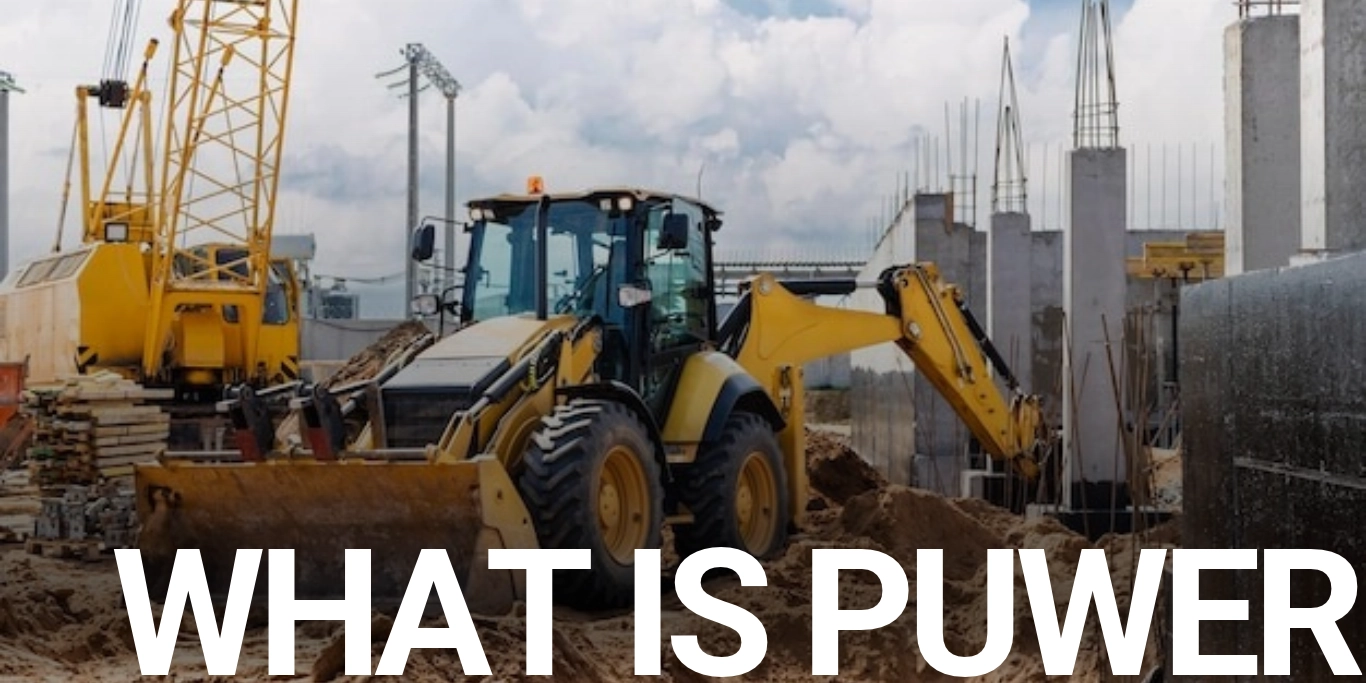
Construction workers use many types of equipment every day. From handheld power tools to large machines, each item must be safe and suitable for the job. But who makes sure that equipment is safe to use? This is where PUWER comes in.
The Provision and Use of Work Equipment Regulations 1998 set out important rules for work equipment. They require employers and other responsible people to make sure equipment is suitable, maintained, inspected and used by trained workers.
These rules apply to many items found on construction sites, including drills, cutting machines, concrete mixers, excavators and other plant.
Understanding PUWER helps workers, supervisors and site managers reduce risks and prevent accidents.
In this guide, we explain what PUWER means, what the law requires and how it applies to everyday construction work. We also look at the difference between PUWER and LOLER.
What’s Included in This Article?
- What PUWER stands for and what it means.
- What the Provision and Use of Work Equipment Regulations 1998 require.
- Examples of PUWER equipment on construction sites.
- Who is responsible for PUWER compliance.
- Equipment inspections and maintenance records.
- The difference between PUWER and LOLER.
- How training and plant NVQs support safe equipment use.
What Does PUWER Stand For?
PUWER stands for Provision and Use of Work Equipment Regulations 1998.
The regulations set out the legal duties for providing and using work equipment safely. They apply to employers, self-employed people and organisations that have control over work equipment used at work.
The term work equipment has a wide meaning. It includes machinery, tools, appliances and equipment used for work.
This means PUWER can apply to a simple hand tool as well as a large piece of construction machinery.
The main aim of PUWER is to prevent injury caused by unsafe or unsuitable equipment. It does this by requiring equipment to be selected, maintained, inspected and used correctly.
The regulations also cover training, safety guards, controls, warnings and safe maintenance.
You can read the official Provision and Use of Work Equipment Regulations 1998 on legislation.gov.uk.
What Does PUWER Require on Construction Sites?
PUWER places several duties on those responsible for work equipment.
The main requirements are that equipment must be suitable for its intended use, kept in a safe condition and used by people with suitable training.
Here are the main areas construction businesses need to consider.
1. Equipment Must Be Suitable for the Job
Work equipment must be suitable for the task and the conditions in which it will be used.
For example, a worker should not use a tool designed for light work to carry out a task that needs heavier equipment.
When choosing equipment, employers must consider the work area, the task and the risks to workers and other people nearby.
They should also make sure that equipment is used only for the purpose and conditions for which it is suitable.
2. Equipment Must Be Maintained
Equipment must be kept in an efficient working state and in good repair.
Poor maintenance can lead to faults, breakdowns and serious injuries. A damaged cable, loose guard or faulty control can put workers at risk.
Employers should have a suitable maintenance system in place. This may include planned servicing, repairs and checks in line with the manufacturer’s instructions.
If machinery has a maintenance log, it must be kept up to date.
3. Equipment Must Be Inspected
PUWER requires certain equipment to be inspected in specific circumstances.
For example, equipment whose safety depends on how it is installed must be inspected after installation and before it is first used. It must also be checked after assembly at a new site or location.
Equipment exposed to conditions that may cause dangerous deterioration must be inspected at suitable intervals. It must also be inspected after exceptional circumstances that could affect its safety.
The inspection must be suitable for the equipment and the risks involved. It may involve a visual check or a more detailed examination by a competent person.
There is no single inspection interval that applies to every item of work equipment. The required checks depend on the equipment, how it is used and the conditions it faces.
4. Workers Must Receive Training
Workers must have enough information, instruction and training to use equipment safely.
Training should cover:
- How to use the equipment correctly.
- The risks linked to its use.
- The safety measures and precautions needed.
- What to do if something goes wrong.
People who supervise or manage the use of work equipment also need suitable health and safety information and training.
Some equipment presents specific risks. In these cases, its use and certain maintenance tasks must be restricted to people who have been given the required training or responsibility.
5. Dangerous Parts Must Be Guarded
Machines often have moving parts that can cause serious injuries.
PUWER requires suitable protection against dangerous parts. This may include fixed guards, interlocking guards or other protective devices.
For example, a cutting machine should have suitable protection to reduce the risk of a worker coming into contact with its blade.
Guards must not be removed or bypassed to make a task quicker. If a guard is damaged or missing, the equipment should not be used until the problem has been dealt with.
6. Equipment Must Have Safe Controls
Equipment must have suitable controls for starting, stopping and changing operating conditions.
Where needed, it must also have emergency stop controls and a safe way to isolate it from its power source.
This is important during cleaning, repair and maintenance. Equipment should be shut down and isolated so it cannot start unexpectedly while someone is working on it.
PUWER also requires suitable markings and warnings where they are needed for safety.
Examples of PUWER Equipment on Construction Sites
PUWER applies to a wide range of construction equipment. The following examples show how the regulations can affect everyday site work.
| Equipment | PUWER safety considerations |
| Power drills | Suitable attachments, safe cables, correct use and maintenance |
| Cutters and saws | Blade guards, emergency stops where required and safe operating methods |
| Concrete mixers | Safe moving parts, stable positioning and suitable controls |
| Grinders | Correct discs, protective guards and safe handling |
| Excavators and dumpers | Safe operation, maintenance, controls and suitable operator training |
| Compressors | Safe connections, pressure-related risks and maintenance |
| Generators | Safe positioning, maintenance and protection from electrical risks |
These examples are not a complete list. PUWER can apply to almost any equipment used for work.
Power Tools and Cutting Equipment
Power tools are common on construction sites, but damaged or poorly maintained tools can cause serious injuries.
A damaged cable, faulty switch or missing guard can make a tool unsafe.
Workers should check their tools before use and report any faults. Supervisors should make sure that damaged equipment is taken out of service until it is repaired or replaced.
Cutting equipment also needs suitable guarding and safe operating procedures. Workers must use the correct blade or cutting attachment for the task.
Concrete Mixers
Concrete mixers contain moving parts that can cause crushing or entanglement injuries.
They must be suitable for the work, stable during use and kept in good working order. Moving parts should have suitable guards, and workers must know how to stop and isolate the machine safely.
Cleaning and maintenance should follow safe procedures. Workers should never reach into a mixer while it is operating.
Construction Plant
Large plant, such as excavators, dumpers and loading shovels, also falls within PUWER.
The equipment must be suitable for the work and maintained in a safe condition. Operators need suitable training and information about the machine, its controls and the risks involved.
Site managers must also consider how plant is used around other workers, vehicles and site activities.
Who Is Responsible for PUWER Compliance?
PUWER duties do not fall on just one person. Responsibility depends on who provides, owns, uses or controls the equipment.
Employers
Employers have a key responsibility to provide suitable and safe work equipment.
They must make sure that equipment is maintained, inspected where required and used by trained workers. They must also provide suitable information, instructions and safety measures.
These duties can apply even when the equipment is hired rather than owned by the employer.
Self-Employed Workers
Self-employed people may also have duties under PUWER.
If they use work equipment as part of their work, they must consider the risks and meet the relevant requirements. Health and safety law may not apply in the same way where their work poses no risk to others, but they should assess their own circumstances carefully.
Equipment Owners and Those in Control
A business or person that owns or has control over work equipment may also have responsibilities.
For example, a company that hires out construction machinery must consider the safety of the equipment it provides.
Supervisors and Site Managers
Supervisors and site managers help put PUWER requirements into practice.
They should check that workers use the correct equipment, follow instructions and report faults. They must also make sure that workers receive suitable training and supervision.
They should not allow damaged or unsafe equipment to remain in use.
Workers and Operators
Workers also have a role in keeping equipment safe.
They should use equipment as instructed, follow safety procedures and report faults. They must not remove guards or use equipment for tasks it was not designed to carry out.
If equipment appears unsafe, they should stop using it and tell their supervisor.
PUWER Inspection Records: What Should Be Kept?
Keeping accurate inspection and maintenance records helps businesses manage equipment safety.
Under Regulation 6, the results of inspections required by that regulation must be recorded and kept until the next inspection under the regulation is recorded.
Where a machine has a maintenance log, the employer must also keep it up to date.
Records may include:
- The equipment’s name or identification number.
- The date of inspection.
- The checks carried out.
- Any faults or defects found.
- Repairs or action taken.
- The name of the person who carried out the inspection.
The exact records needed will depend on the equipment and the checks being completed.
It is also important to understand that a daily pre-use check is not automatically the same as a formal inspection under Regulation 6. Both may be needed, depending on the equipment and the risks.
Good records help site managers see when equipment was last checked, identify repeat problems and show that safety arrangements are being followed.
What Is the Difference Between PUWER and LOLER?
PUWER and LOLER are both important equipment safety regulations, but they cover different areas.
PUWER stands for the Provision and Use of Work Equipment Regulations 1998. It applies to work equipment generally and focuses on suitability, maintenance, inspection, guarding and safe use.
LOLER stands for the Lifting Operations and Lifting Equipment Regulations 1998. It applies specifically to equipment used for lifting or lowering loads, including people.
LOLER also requires lifting operations to be properly planned by a competent person, suitably supervised and carried out safely. It requires thorough examinations of lifting equipment at set intervals or under an examination scheme.
| PUWER | LOLER |
| Covers work equipment generally | Covers lifting equipment and lifting operations |
| Requires suitable and safe equipment | Requires lifting equipment to be suitable and strong enough for the task |
| Covers maintenance and relevant inspections | Requires thorough examinations in specified circumstances |
| Requires suitable information and training | Requires lifting operations to be planned, supervised and carried out safely |
Some equipment falls under both regulations.
For example, a crane is work equipment under PUWER, but it is also lifting equipment under LOLER. It must meet the relevant requirements of both regulations.
A handheld drill, on the other hand, would usually fall under PUWER but not LOLER.
You can read more in the HSE guides to PUWER and LOLER.
How Can Plant NVQs Support Safe Work Equipment Use?
Safe equipment use depends on more than having access to the right machine. Workers also need the skills and knowledge to operate it correctly.
A plant-related NVQ can help workers demonstrate their practical skills and knowledge in their job role.
For example, a Level 2 NVQ in Plant Operations can assess a worker’s ability to prepare and operate specific types of construction machinery safely. A plant maintenance qualification can help workers demonstrate skills in inspecting, servicing and repairing machinery.
Think Construction Skills offers plant-related qualifications, including:
- Level 2 NVQ Diploma in Plant Operations – Extracting
- Level 2 NVQ Certificate in Plant Operations – Transporting Loads
- Level 3 NVQ Diploma in Construction Plant or Machinery Maintenance
An NVQ does not replace the employer’s PUWER duties, equipment checks or any additional training needed for a particular machine. It provides evidence of occupational competence in the relevant area.
If you work with construction plant and want to gain a recognised qualification, speak to Think Construction Skills about the right NVQ for your role.
Conclusion
PUWER plays an important part in construction site health and safety. It helps make sure that equipment is suitable, maintained, inspected and used by people with the right training.
The regulations apply to a wide range of work equipment, from simple hand tools to large construction machinery. Employers and those in control of equipment must manage the risks, while supervisors and workers must follow safe working procedures and report problems.
Understanding the difference between PUWER and LOLER is also important. PUWER covers work equipment generally, while LOLER adds specific duties for lifting equipment and lifting operations.
For plant operators and maintenance workers, suitable training and recognised qualifications can help demonstrate practical competence. Think Construction Skills can support your next step with plant NVQ assessments.
Key Takeaways
- PUWER stands for the Provision and Use of Work Equipment Regulations 1998.
- The regulations apply to work equipment used in construction and other workplaces.
- Equipment must be suitable, maintained and inspected where required.
- Workers must receive suitable information, instruction and training.
- Dangerous machine parts must have suitable guards and protective measures.
- Employers, equipment owners and people in control may have PUWER responsibilities.
- Inspection records must be kept where Regulation 6 requires them.
- LOLER applies specifically to lifting equipment and lifting operations.
- Plant NVQs can help workers demonstrate their skills, but do not replace legal safety duties.